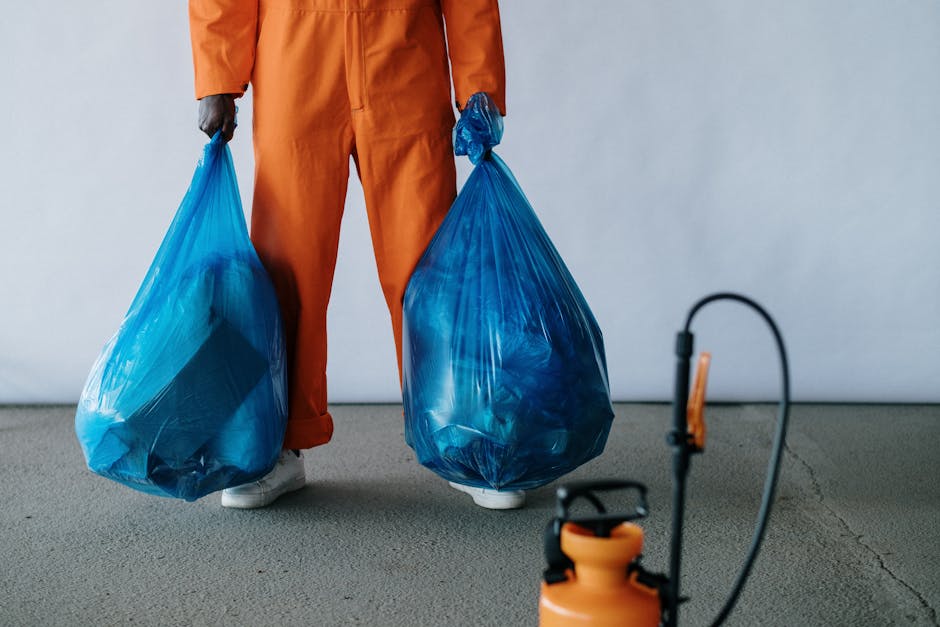
Hazardous waste removal rules for Crews Hill properties: what owners, landlords, and movers need to know
If you own, let, manage, or are moving out of a property in Crews Hill, hazardous waste removal rules can feel a bit murky at first. One minute you're clearing a loft or garage, the next you've found old paint tins, aerosols, garden chemicals, a cracked fluorescent tube, and maybe an ancient battery charger that looks as if it has survived three decades of damp British winters. The tricky part is that these items are not just "rubbish". They need to be sorted, stored, and removed with care. This guide explains the practical side of Hazardous waste removal rules for Crews Hill properties in plain English, so you can stay safe, avoid mistakes, and make sensible decisions without overcomplicating it.
We'll cover what counts as hazardous waste, how removal usually works, who needs to pay attention, and what good practice looks like in a real home or business setting. You'll also find a step-by-step process, a useful checklist, and a few grounded tips from the sort of situations people actually run into during house clears, office moves, and end-of-tenancy cleanouts. No jargon for the sake of it. Just the useful stuff.
Why Hazardous waste removal rules for Crews Hill properties Matters
Hazardous waste matters because it can harm people, property, and the environment if it is handled badly. That's the short version. In a practical sense, the problem is usually less dramatic than people imagine, but still serious enough to deserve attention. A leaking tin of solvent in a shed can damage flooring, stain storage areas, and create fumes. A broken fluorescent tube in a cupboard can expose people to sharp glass and, depending on the type, other contaminants. And mixing different waste streams together can create headaches later when you try to get rid of everything properly.
Crews Hill properties often have a mix of residential, semi-rural, workshop, and commercial characteristics. That means hazardous materials can appear in places people forget to check: garden outbuildings, utility rooms, lock-ups, old office cupboards, detached garages, or under-stairs storage. Truth be told, the worst surprises are usually the quiet ones. Not the dramatic oil drum in the corner, but the small box of half-used chemicals pushed behind a lawnmower.
Following the rules is also about keeping the rest of the clear-out simple. If you separate hazardous items early, the remainder of the move or clearance is easier to pack, easier to transport, and easier to price. It also reduces the chance of a disposal company refusing part of the load at the last minute. Nobody wants that on a Friday afternoon.
For landlords and property managers, there's another layer: protecting incoming tenants and reducing liability if someone gets hurt or contaminated materials are left behind. For homeowners, the priority may be safe decluttering before a move. For businesses, it can be about continuity, record-keeping, and meeting duty-of-care expectations without chaos.
Expert summary: the most reliable approach is simple: identify hazardous items early, keep them separate, don't guess, and use a disposal route that is suitable for the specific material. If in doubt, treat it as hazardous until confirmed otherwise.
How Hazardous waste removal rules for Crews Hill properties Works
In the UK, hazardous waste is generally waste that contains substances or properties that could cause harm to human health or the environment. The exact list is broader than many people expect. It can include everyday-looking items that only become problematic because of what is inside them or how they were used.
At property level, the process usually follows a practical sequence:
- Identify the waste. Work through rooms, sheds, lofts, basements, garages, and storage areas.
- Separate it from general waste. Keep hazardous items apart from cardboard, furniture, and mixed rubbish.
- Check the condition. Leaking, broken, corroded, or unlabeled items need extra caution.
- Store safely until removal. Use a dry, secure, ventilated place away from heat sources and children.
- Arrange suitable collection or drop-off. The method depends on the item, volume, and access conditions.
- Document where appropriate. For businesses, paperwork and transfer records matter more than people often realise.
For domestic properties, the practical question is often: "Can this be moved with the rest of the house contents?" Sometimes yes, sometimes absolutely not. A clean, sealed paint tin is one thing. A swollen battery or a container with unknown liquid residue is another. The more uncertain the item, the more careful the handling should be.
For commercial premises, there may be additional internal rules around access, containment, and accountability. Office kitchens, maintenance cupboards, and plant rooms are common hotspots. During an office clear-out, the hazardous material is often not the obvious big item; it's the forgotten cleaning chemicals, toner cartridges, old light tubes, or maintenance products sitting at the back of a shelf.
If a property clearance or move involves mixed waste, the team carrying out the work needs to know what can be loaded together and what must be isolated. That is why experienced removal teams tend to ask pointed questions up front. It saves everyone time later, and, frankly, it avoids awkward "we can't take that" moments once the van is already half-full.
Where a property owner is also arranging broader moving support, it can be useful to coordinate hazardous waste sorting alongside house removals or broader removal services, especially if the clearance is part of a move-out deadline. For business moves, the same logic applies with office removals and carefully staged loading.
Key Benefits and Practical Advantages
Doing hazardous waste removal properly brings more benefits than many people expect. The first is obvious: safety. The second is peace of mind. The third, which people often only notice later, is that the whole property clear-out becomes more orderly.
- Reduced risk of injury from sharp, toxic, flammable, or reactive materials.
- Less chance of contamination spreading to carpets, furniture, vehicles, or storage areas.
- Smoother removals day because items are already sorted before the crew arrives.
- Better compliance with waste duty-of-care expectations and any paperwork needs.
- Fewer refused items and fewer delays at the point of collection or disposal.
- Better environmental handling through proper separation and recycling where appropriate.
There is also a financial angle, though it's usually indirect. Sorting hazardous waste early can reduce wasted labour, surprise charges, and second visits. A clear-out that starts messy tends to stay messy. A clear-out that starts organised is, well, much kinder to your time and your wallet.
For landlords and agents, another advantage is reputational. A tidy, compliant handover feels professional. For businesses, it supports a more defensible internal process if questions come up later. And for homeowners who are preparing a property for sale or rent, removing hazardous debris can help the place feel safer and more presentable almost immediately.
If you are already comparing removal support, it may help to review about us and insurance and safety information before making a decision. It's a sensible way to judge whether a provider treats risk seriously or just talks a good game.
Who This Is For and When It Makes Sense
This topic is relevant to a lot of people in Crews Hill, not just the ones dealing with a dramatic clean-up. In practice, hazardous waste rules matter whenever you are moving, clearing, refurbishing, or managing a property that contains old stored materials.
- Homeowners clearing garages, sheds, lofts, utility rooms, or under-stair cupboards.
- Tenants trying to leave a property clean and avoid disputes.
- Landlords dealing with abandoned items after a tenancy ends.
- Estate executors handling a property where contents have built up over years.
- Office managers disposing of maintenance, IT, or cleaning-related waste.
- Tradespeople and small firms storing substances that cannot go into general waste.
It makes sense to focus on this early if you already know there are chemicals, batteries, or other specialist items in the property. It also makes sense if access is tight and loading has to be planned carefully. A side gate, narrow hallway, or shared driveway can turn a simple job into a slightly fiddly one. Been there, and it's rarely as simple as the first look suggests.
Crews Hill also has properties where gardens, workshop-style spaces, and detached outbuildings are more common than in a dense urban flat block. That changes the game a bit. More space often means more storage, and more storage often means more forgotten waste. Funny how that works.
For move-related scenarios, a useful rule of thumb is this: if you would be uncomfortable putting the item straight into a family car boot, it probably needs a more deliberate disposal plan before transport. Not every odd-looking item is dangerous, of course, but caution beats assumptions every time.
Step-by-Step Guidance
If you want the process to run smoothly, keep it structured. The following approach works well for most domestic and small commercial properties.
1) Walk the property methodically
Start with the places people forget: shed shelves, garage corners, boiler cupboards, cleaning cupboards, and old storage boxes. Make a quick list rather than trying to decide on the spot. Speed matters less than accuracy here.
2) Sort items into clear categories
A useful rough split is:
- flammables
- batteries and power packs
- paint and solvents
- aerosols and pressurised containers
- cleaning chemicals
- fluorescent tubes and certain light fittings
- oil, fuel, or automotive fluids
- unknown or unlabeled containers
If something is unlabeled, resist the urge to open it. I know, that sounds obvious, but people do it anyway when they're in a rush. Usually once. Sometimes with a grim expression and a window wide open.
3) Isolate and secure the items
Keep hazardous waste upright where possible, away from heat, food, and children. If a container is damaged, place it into a suitable secondary container only if that can be done safely. Don't improvise with random shopping bags or old cereal boxes. That's the sort of thing that feels clever for about three seconds.
4) Confirm which items need special handling
Some materials may be accepted with careful packaging; others may need a specialist route. For example, paint tins and batteries are often common in property clearances, but they should still be separated from general rubbish. If you are unsure, ask before collection day rather than after the van has arrived.
5) Coordinate with the removal plan
If the hazardous waste forms part of a wider move, schedule it early. That way, the main clearance or move can happen around the specialist items rather than the other way around. It is much easier to clear a property cleanly when the awkward stuff has already been dealt with.
6) Keep the route clear
On collection day, make sure the path to the load area is dry, well lit, and uncluttered. A quick sweep of the route can prevent trips, spills, and unnecessary handling. Sometimes it's the boring prep that saves the day.
Expert Tips for Better Results
In our experience, the biggest difference between a smooth hazardous waste removal and a frustrating one is not the final disposal point. It is the preparation. A few practical habits make life much easier.
- Photograph questionable items before moving them. It helps with identification and avoids second-guessing later.
- Use one holding area for all suspect items so they do not get scattered back through the property.
- Label boxes clearly with broad categories, not vague notes like "stuff". Tempting, but not useful.
- Don't overfill containers. Half-full and secure is far better than packed to the brim.
- Keep chemicals away from metal tools and from anything that could spark.
- Tell the removals team early if there are stairs, narrow access, or parking constraints.
A useful local-minded trick is to think in terms of "load order". Put the safest, easiest items first and the most sensitive items last, or apart entirely. That way you avoid shifting hazardous goods around repeatedly. Repeated movement is where a lot of mistakes creep in.
If the property is being cleared as part of a broader move, services such as packing and unpacking services can also help keep the job more controlled. A tidy packing flow makes it much easier to track which items are staying, moving, or being discarded.
One more thing: if a contractor promises to take everything without asking what the waste is, that sounds convenient, but it is not always a good sign. Responsible operators usually want specifics. That is not fussiness. It is how you avoid trouble.
Common Mistakes to Avoid
These are the errors that show up again and again during property clearances. None of them are rare, which is exactly why they're worth spelling out.
- Putting hazardous items in with general waste. It can contaminate the entire load.
- Mixing different chemicals. Even small quantities can react badly.
- Leaving batteries loose in a box. They can short out against metal objects.
- Ignoring hidden waste in outbuildings. Sheds and garages are classic hiding spots.
- Assuming old equals harmless. Older items can be unstable or degraded.
- Rushing on collection day. That's when people mislabel, misplace, or forget items.
Another common issue is trying to "make the problem disappear" by breaking things down quickly. For example, some people open old containers outdoors and tip contents into another vessel without understanding what's inside. Not a great plan. It usually creates more mess, more exposure, and more anxiety.
Also, do not store hazardous waste beside household recycling and assume someone will sort it later. Maybe they will. Maybe they won't. Either way, you've made the process more complicated than it needed to be.
Tools, Resources and Recommendations
You do not need a warehouse of specialist gear to manage property-level hazardous waste safely, but a few basic tools are worth having ready.
| Item | Why it helps | Best use |
|---|---|---|
| Heavy-duty gloves | Protect hands from sharp edges and residues | Sorting and brief handling |
| Clear sealable boxes | Helps keep small items contained and visible | Batteries, small containers, accessories |
| Labels and marker pen | Reduces confusion later | Category marking and notes |
| Absorbent material | Useful for minor seepage if handled correctly | Small containment situations |
| Sturdy trolley or sack truck | Reduces lifting strain | Moving sealed boxes safely |
For most property owners, the most valuable "resource" is not a gadget. It is a clear sorting system. Even a simple set of boxes labelled "batteries", "paint", "aerosols", and "unknown" can save an enormous amount of time and uncertainty.
If you are evaluating a provider, take a look at their health and safety policy and recycling and sustainability approach. Those pages tell you a lot about the way the company thinks, and whether they treat waste as a responsibility rather than an afterthought.
And if you are still comparing options, the pricing and quotes page may help you understand how work is typically assessed. With hazardous waste, a quote often depends more on access, volume, and item type than on some tidy one-size-fits-all price. That's normal.
Law, Compliance, Standards, or Best Practice
Without turning this into a legal lecture, it is worth understanding the compliance basics. In the UK, waste producers and handlers have duties around correct classification, storage, and transfer of waste. For businesses, records and traceability are especially important. For householders, the focus is often more practical, but the same principle remains: don't hand over waste blindly and hope it's fine.
Best practice usually means:
- identifying waste accurately rather than guessing
- keeping hazardous and non-hazardous waste separate
- using suitable packaging and storage
- making sure the waste goes to an appropriate disposal route
- keeping transfer information where required, especially for commercial work
For office and commercial settings, the process should be even more structured because the waste may include electronics, toner, batteries, cleaners, or maintenance chemicals. That is one reason why commercial clients often pair waste planning with commercial moves or office relocation services; it creates one coordinated plan instead of a series of disconnected jobs.
Insurance also matters. If a collection is being handled by a professional removal team, ask how they manage risk and what happens if a container leaks or an item is damaged in transit. The answer should be calm, clear, and specific. If it sounds vague, keep asking questions.
Options, Methods, or Comparison Table
There is more than one way to deal with hazardous waste from a Crews Hill property. The right option depends on volume, urgency, access, and how mixed the load is.
| Method | Best for | Pros | Watch-outs |
|---|---|---|---|
| Self-sorting and scheduled disposal | Small amounts from homes | Low cost, controlled, flexible | Requires time, care, and correct identification |
| Professional collection with removal support | Mixed clear-outs and move-related work | Convenient, organised, less lifting | Needs clear communication about item types |
| Commercial waste planning | Offices and business premises | Better traceability and scheduling | More paperwork and coordination |
| Phased clearance | Large homes or estates | Reduces pressure and mistakes | Takes longer overall |
For many Crews Hill properties, the most sensible route is a phased clearance: remove obvious non-hazardous items first, isolate the risky materials, and then deal with those separately. It feels slower at the start, but it usually saves time overall. Funny how the careful route often turns out to be the fast one.
If you already know the job will involve a vehicle, access coordination, and heavy lifting, it can be helpful to look at broader removal support such as man with van or removals. Not because those pages are about hazardous waste specifically, but because they signal the type of moving support that can help with the logistics around a clearance.
Case Study or Real-World Example
Here's a realistic example. A Crews Hill homeowner is preparing to sell a detached property with a garage, a back shed, and a utility cupboard. The house itself is fairly tidy, but once the storage spaces are opened up, there are old tins of gloss paint, a box of half-used cleaning products, a few batteries, an old strip light, and several unidentified bottles sitting behind a bike pump.
The first instinct is to throw everything into the skip pile and move on. But that would be a mistake. Instead, the homeowner sorts the items into categories, keeps the unknown bottles separate, and clears the rest of the house contents around them. The removals day then goes much more smoothly because the crew can load furniture, boxes, and non-hazardous items without stopping every ten minutes to ask what each container is.
By the time the specialist waste is removed, the property is already safer and easier to hand over. The garage no longer smells faintly of solvent, the cupboards are empty, and there is no last-minute panic about whether a leaking tin has stained the floor. Small win, but a real one.
That kind of scenario comes up often. Not dramatic, not headline-making, just very ordinary property life. Which is exactly why it's worth handling well.
Practical Checklist
Use this checklist before any hazardous waste removal from a Crews Hill property.
- Walk every storage area, not just the main rooms.
- Separate hazardous items from general rubbish immediately.
- Check for leaks, cracks, corrosion, swelling, or damaged seals.
- Do not mix chemicals, fuels, or unknown liquids.
- Keep batteries and sharp objects contained and labelled.
- Store items away from heat, food, and children.
- Take photos of unclear or unlabeled items.
- Tell the removals team about access issues in advance.
- Confirm what can and cannot be collected together.
- Keep any paperwork or notes for business or landlord records.
- Double-check sheds, lofts, garages, and utility cupboards before final clearance.
Quick takeaway: if you sort early, label clearly, and avoid guessing, you reduce most of the risk right away. That's the real secret here. Not glamorous, just effective.
Get a free quote today and see how much you can save.
Conclusion
Hazardous waste removal rules for Crews Hill properties are not something to overthink, but they are also not something to wing. The safest and most practical approach is to identify the waste early, keep it separate, and choose a removal method that fits the actual item type rather than the quickest possible shortcut. That alone prevents a surprising number of problems.
Whether you are clearing a family home, preparing a rental, or organising a business move, the same principle applies: careful sorting makes everything else easier. It protects people, keeps the property in better shape, and gives you far more control over the day itself. And yes, it may take a bit longer up front. Usually worth it, though.
If you're planning a bigger clearance or move, start with the awkward items first. The rest of the job will feel lighter, cleaner, and a lot less stressful. That's a decent way to begin, really.
Frequently Asked Questions
What counts as hazardous waste in a Crews Hill property?
Typical examples include paint, solvents, aerosols, batteries, oils, fuels, cleaning chemicals, fluorescent tubes, and unknown liquids or powders. The exact status depends on the item and its condition, so if you are unsure, keep it separate until it can be checked properly.
Can hazardous waste go in with normal house clearance rubbish?
No, it should not. Mixing it with general waste can contaminate other items, create handling risks, and make disposal more complicated. It is better to isolate it at the start, even if there is only a small amount.
Do I need special help for a few old paint tins?
Sometimes not, but you still need to handle them carefully. Small quantities can often be managed as part of a planned collection, but they should be clearly separated, securely stored, and described accurately before removal.
What should I do with unknown bottles found in a shed?
Do not open them. Keep them upright, avoid moving them more than necessary, and treat them as unknown hazardous items until identified. If a label is missing or damaged, that is a sign to slow down, not speed up.
Are batteries considered hazardous waste?
Yes, batteries need careful handling because they can leak, short circuit, or create fire risk if stored badly. Keep them separate from metal objects and general rubbish, and do not leave them loose in an open box.
How should landlords handle hazardous waste left by tenants?
Landlords should document the items found, isolate them safely, and arrange appropriate removal before re-letting the property. If the waste is extensive or commercial in nature, keeping records is especially useful.
Does hazardous waste removal take longer than a normal clearance?
Usually yes, because items must be identified, separated, and handled more carefully. The time difference is often modest for small domestic jobs, but it can become significant when there are many mixed materials or difficult access points.
What if the property has a narrow entrance or awkward access?
Tell the removal team in advance. Access affects how items are moved, how they are staged, and whether a small vehicle or different loading method is needed. It is one of those details that sounds minor until you are carrying boxes through a tight hallway.
Can hazardous waste be dealt with during an office move?
Yes, and that is often the best time to handle it, especially if the office is already being packed and cleared. Just make sure the items are identified early so they do not get mixed into the general relocation load.
How do I know if a removals provider is suitable for this kind of work?
Look for clear communication, sensible safety information, and a willingness to ask detailed questions about the waste. A provider that understands removal company standards, safety, and planning is usually a better fit than one that only talks in vague promises.
Should I keep paperwork for small domestic hazardous waste jobs?
It is usually a good idea to keep notes, photos, or receipts where possible, especially if you are a landlord, executor, or business owner. For private homes, it is less formal, but a simple record can still be helpful if questions arise later.
What is the safest first step if I think there may be hazardous waste on site?
Stop and assess before touching anything. Separate the area, check for obvious leaks or damage, and make a list of the items you can see. A calm first pass prevents a lot of avoidable trouble, and that's often the part people rush.